MediWing
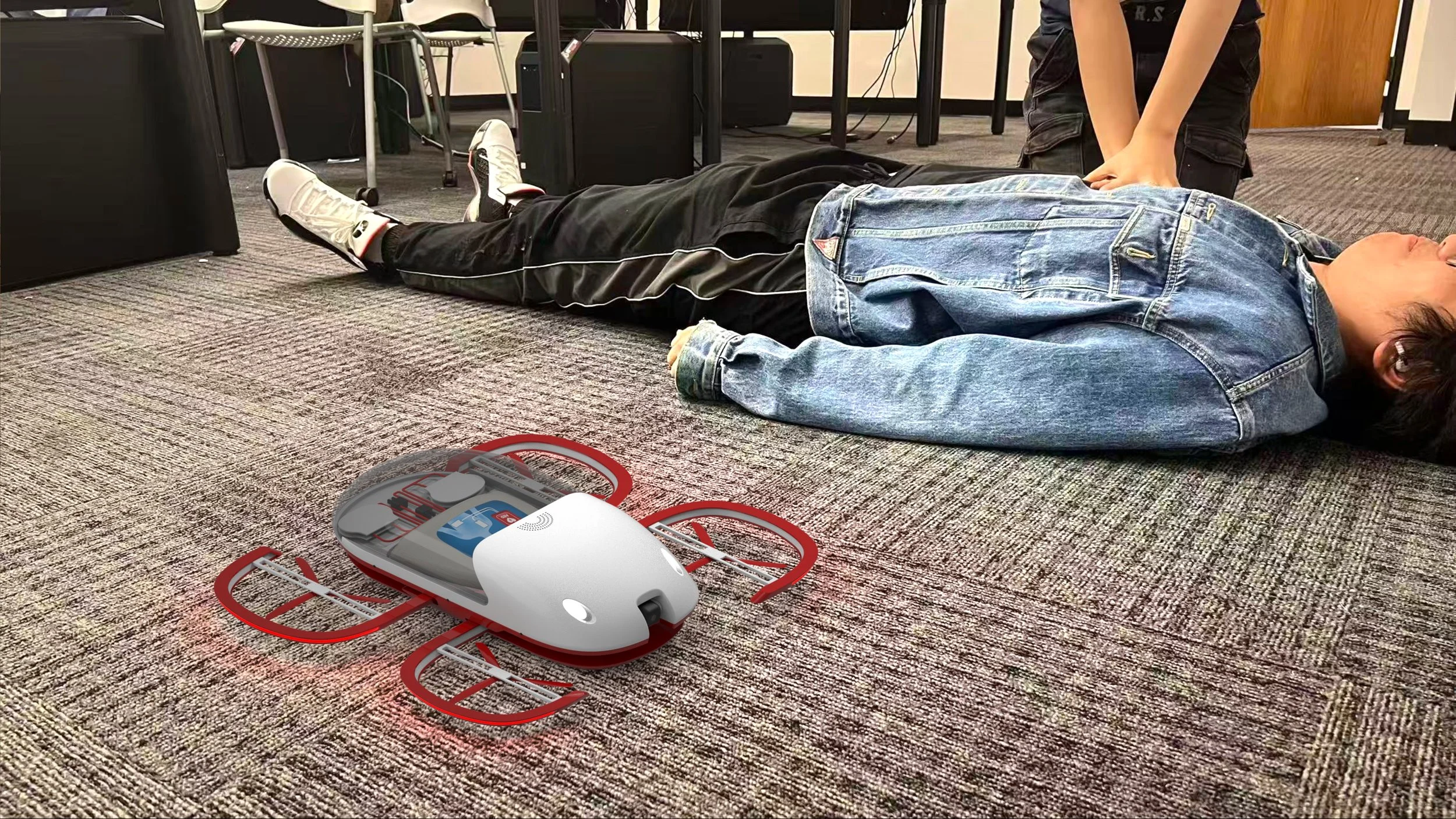
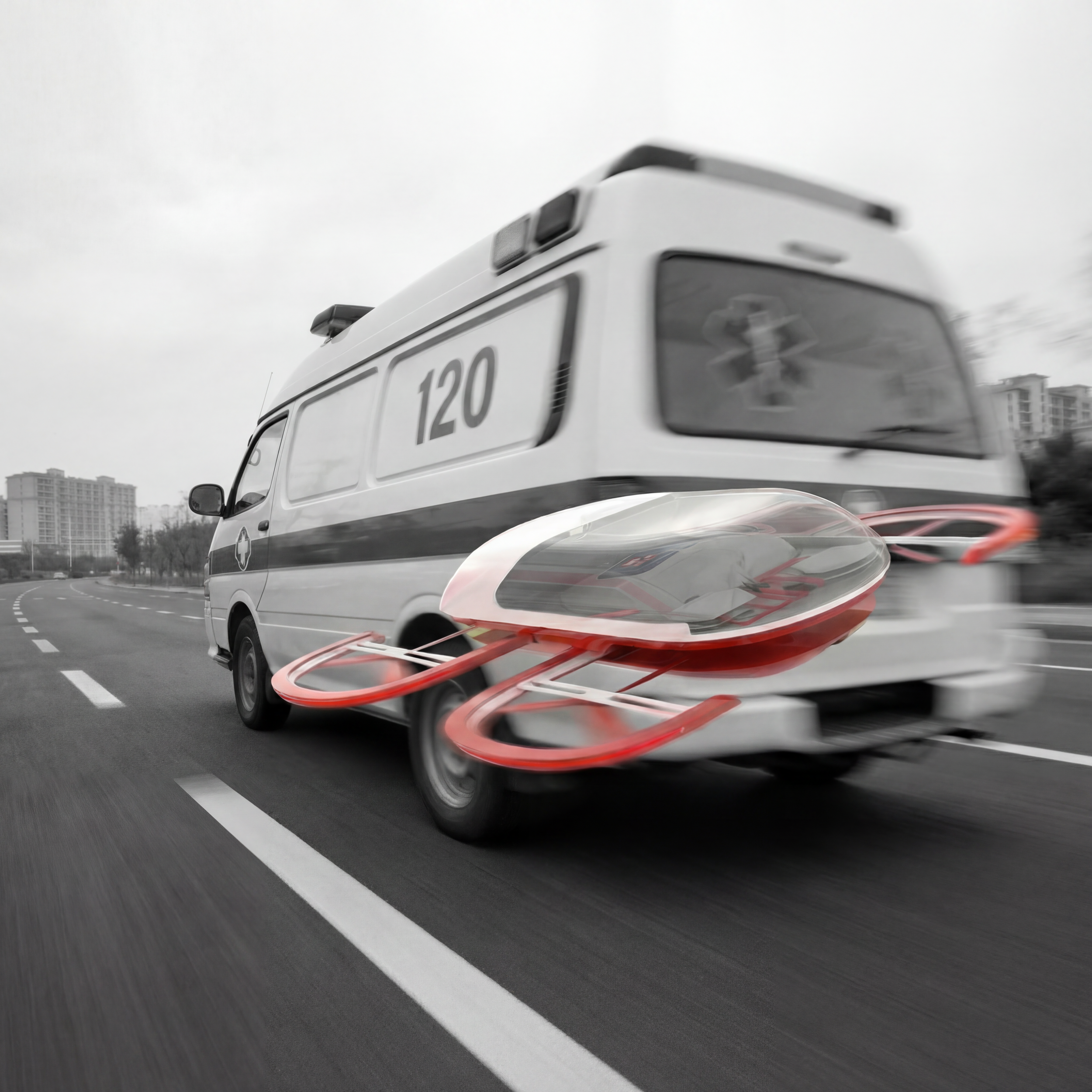
Medical drone designed to deliver AED in public areas
Duration: 9 months, August-December 2025
Focus: Industrial Design, Medical Device Design, Drone Integration

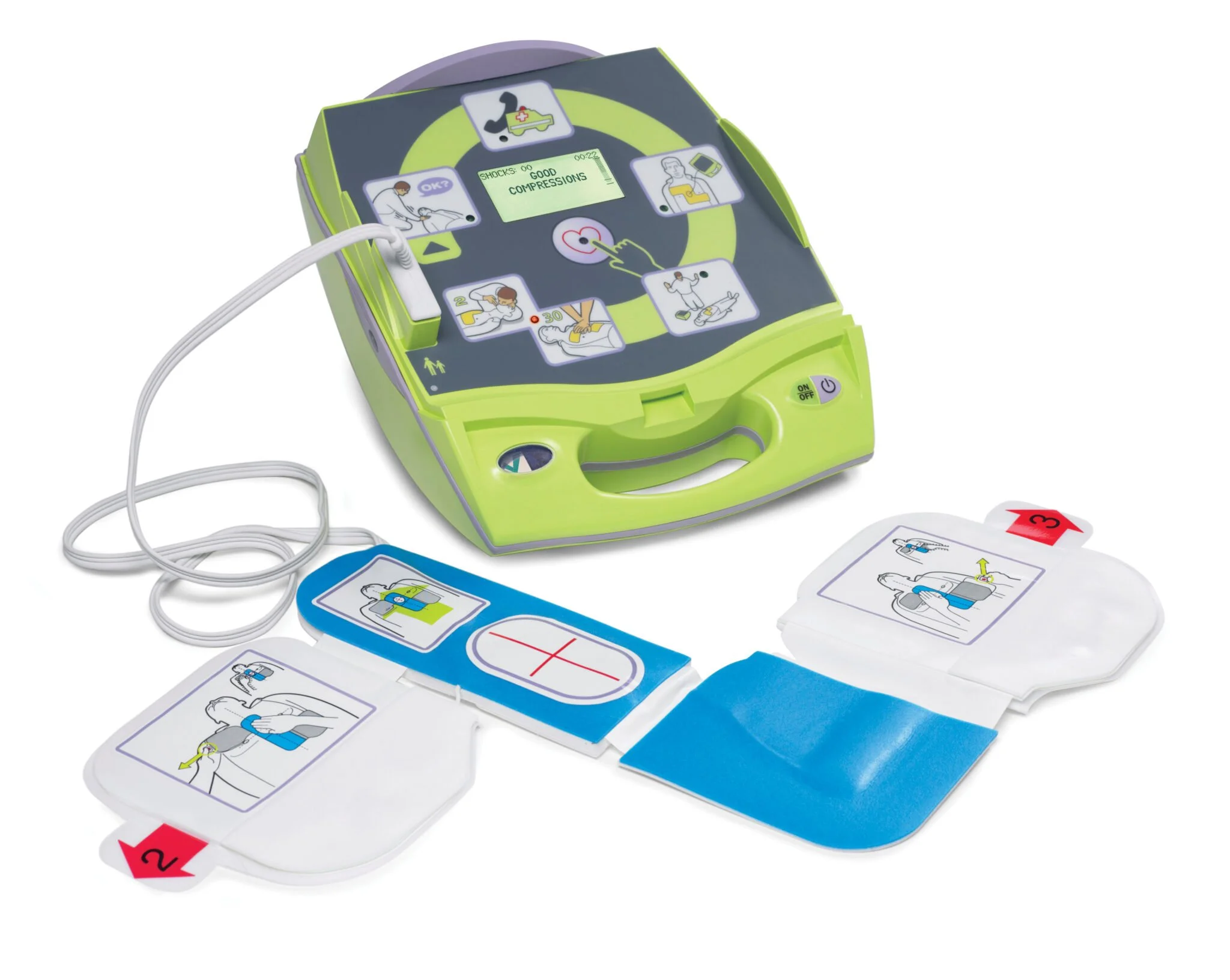
What is AED
An Automated External Defibrillator (AED) is a portable device used to treat sudden cardiac arrest. Immediate access to an AED can dramatically improve survival rates, making it one of the most critical tools in emergency response.
Effective Defibrillation within 4 minutes can maintain a successful rescue to 60%; 90% if Defibrillation is done within
1 minute.
In China…
In 2019, Heart Disease accounted for 23.65% of deaths in urban areas, which is the second leading cause of death nationwide
1.78M people die each year due to heart disease, and 90% is outside the hospital

The number of AED per 100K people is vary from 0.2 to 15, compared to 200–400 in other developed countries

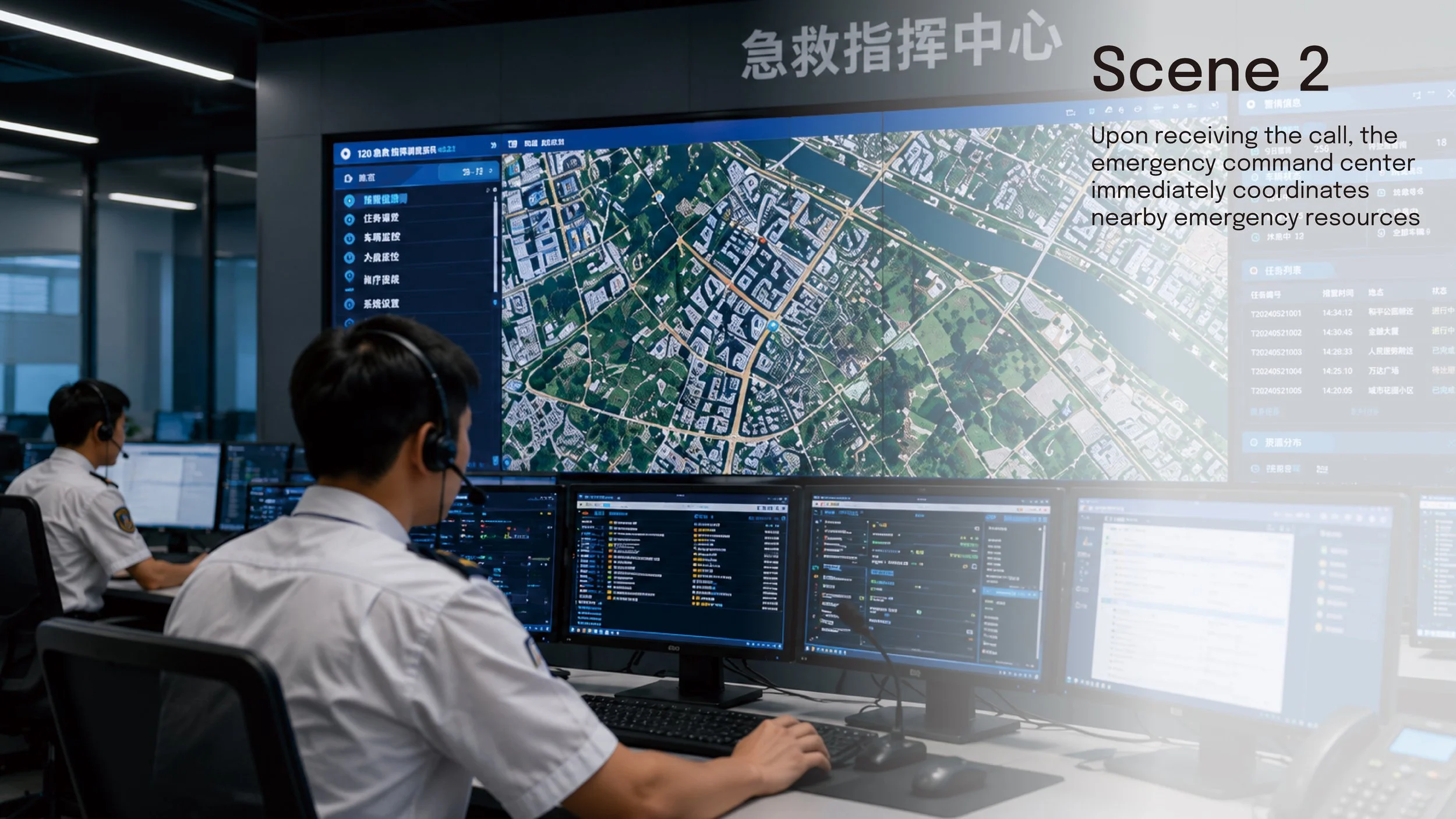
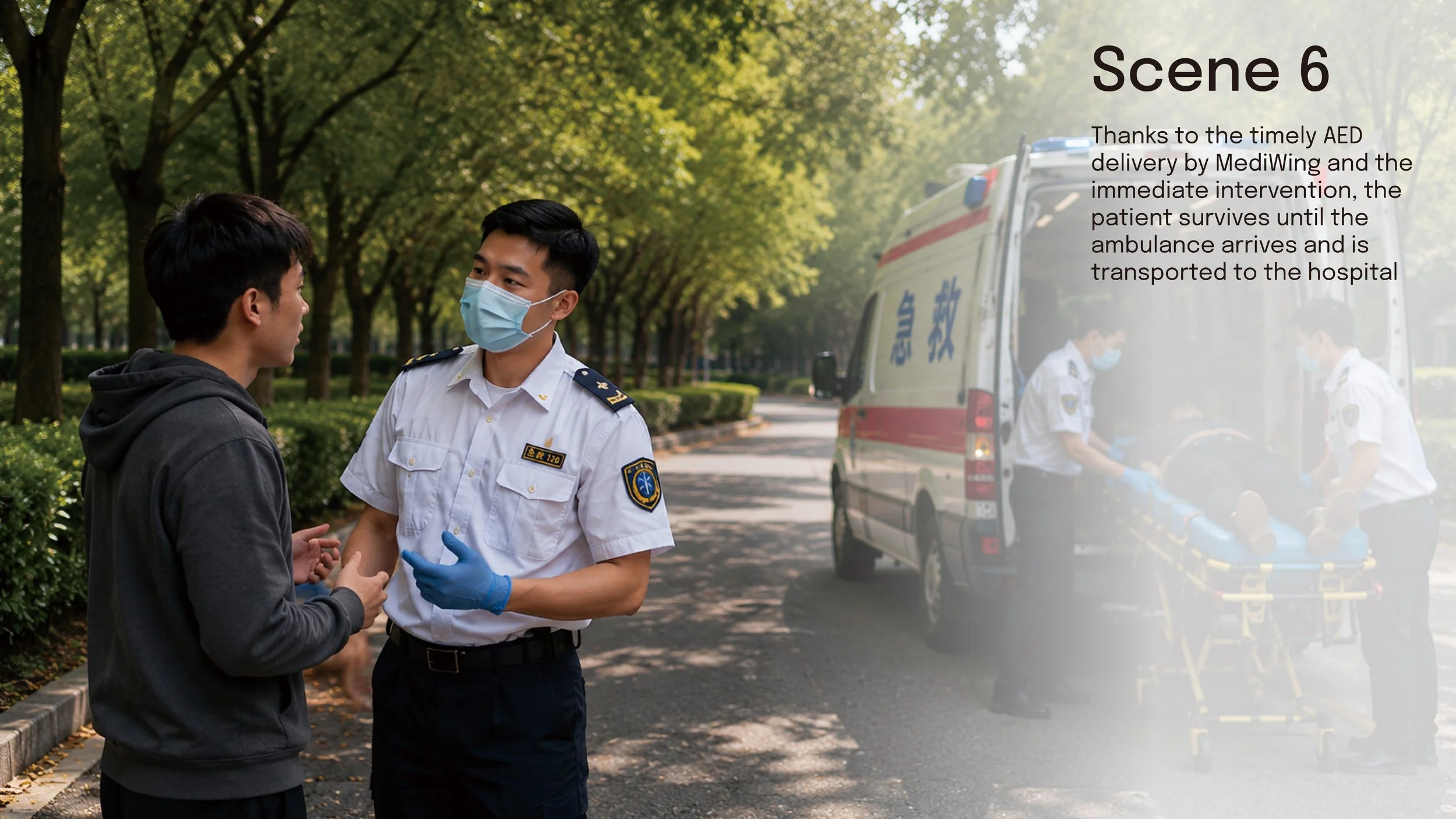
The average time for first aid response is 15 minutes. The time will take much longer in the advanced cities
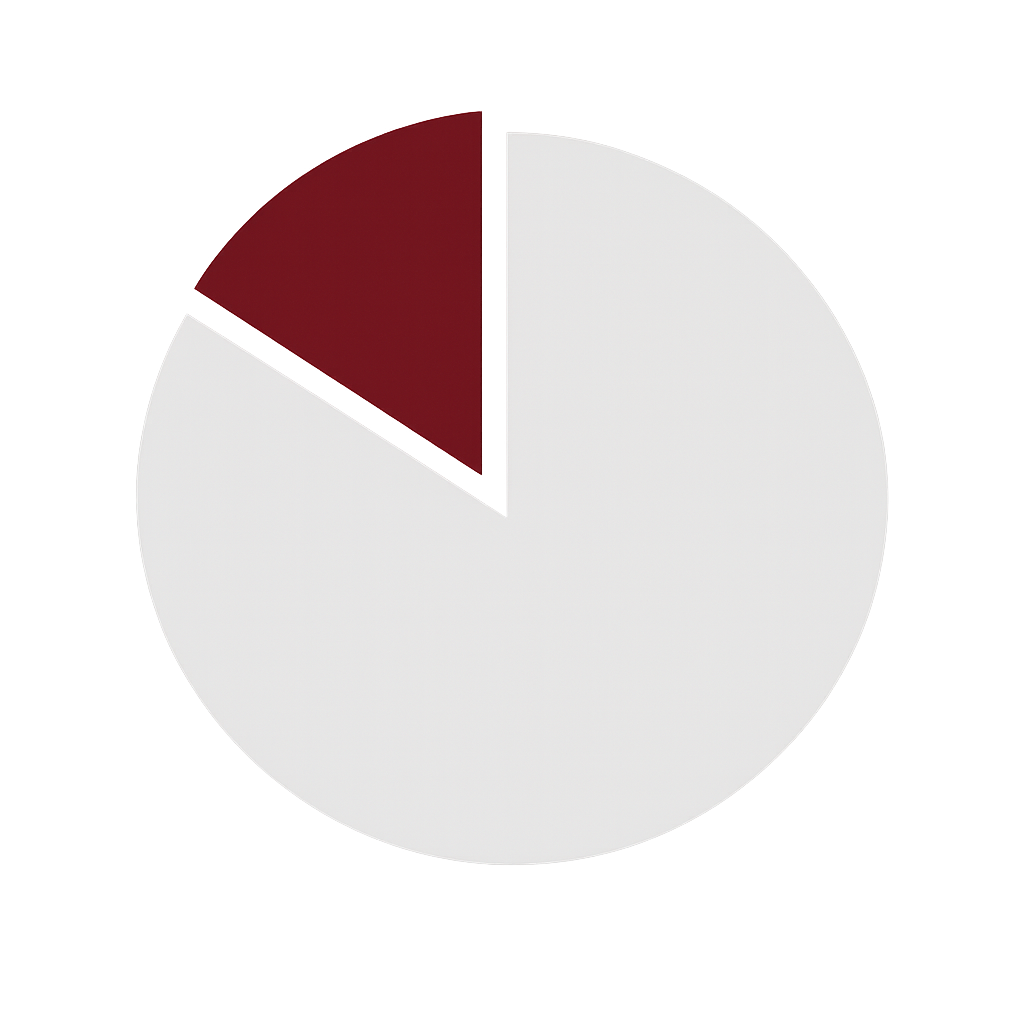
To understand public responses during medical emergencies, below is the findings from a study involving 280 participants across different regions and age groups
Problem #1
Early AED intervention is critical, but current coverage is insufficient.
Ambulance response times are heavily affected by traffic and location, making early CPR and AED intervention essential. However, the current AED coverage in China is insufficient, limiting victims' access to this effective treatment.
Investigation
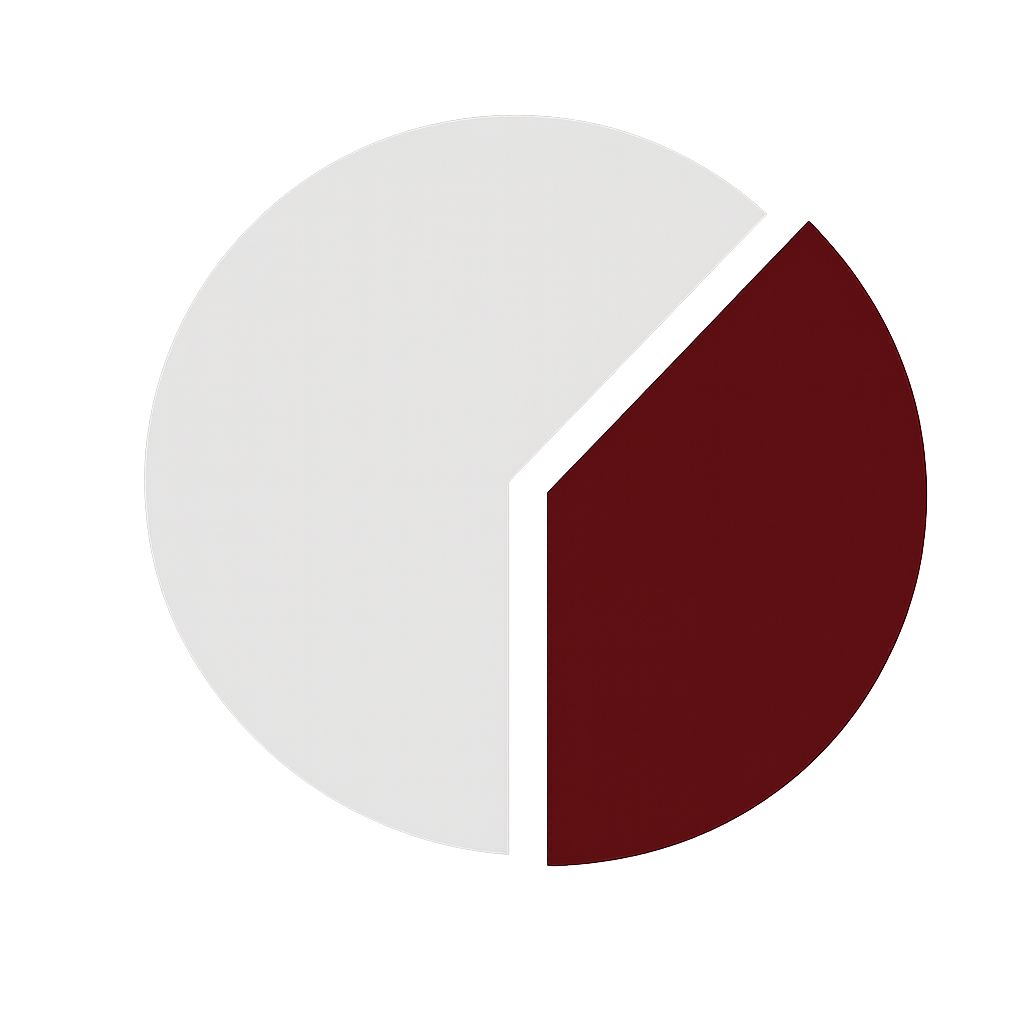
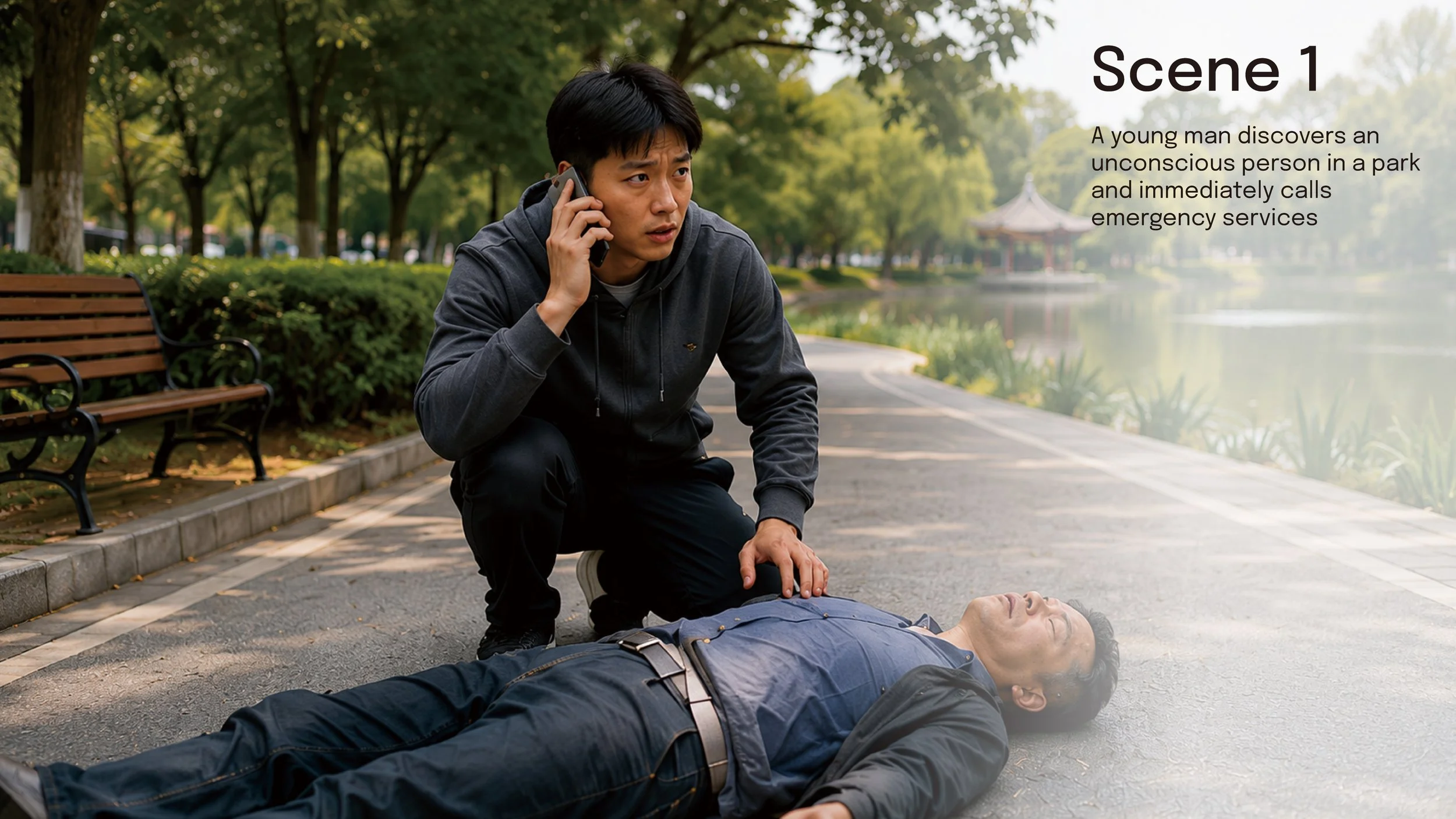
The biggest concern is legal responsibility. Despite the existence of Good Samaritan laws, many people still worry about potential liability and prefer not to intervene.


42% of interviewees are not willing or not sure to help
Problem #2
Most bystanders are unwilling to act independently during an emergency.
Without clear instructions or professional guidance, many bystanders are unsure how to respond and hesitate to provide assistance.
Problem #2
Without clear instructions or professional guidance, many bystanders are unsure how to respond and hesitate to provide assistance.
Let’s Solve Them
Problem #1
Without clear instructions or professional guidance, many bystanders are unsure how to respond and hesitate to provide assistance.

Inspiration
Crustaceans | Drone | Organic
+ Geometric Form
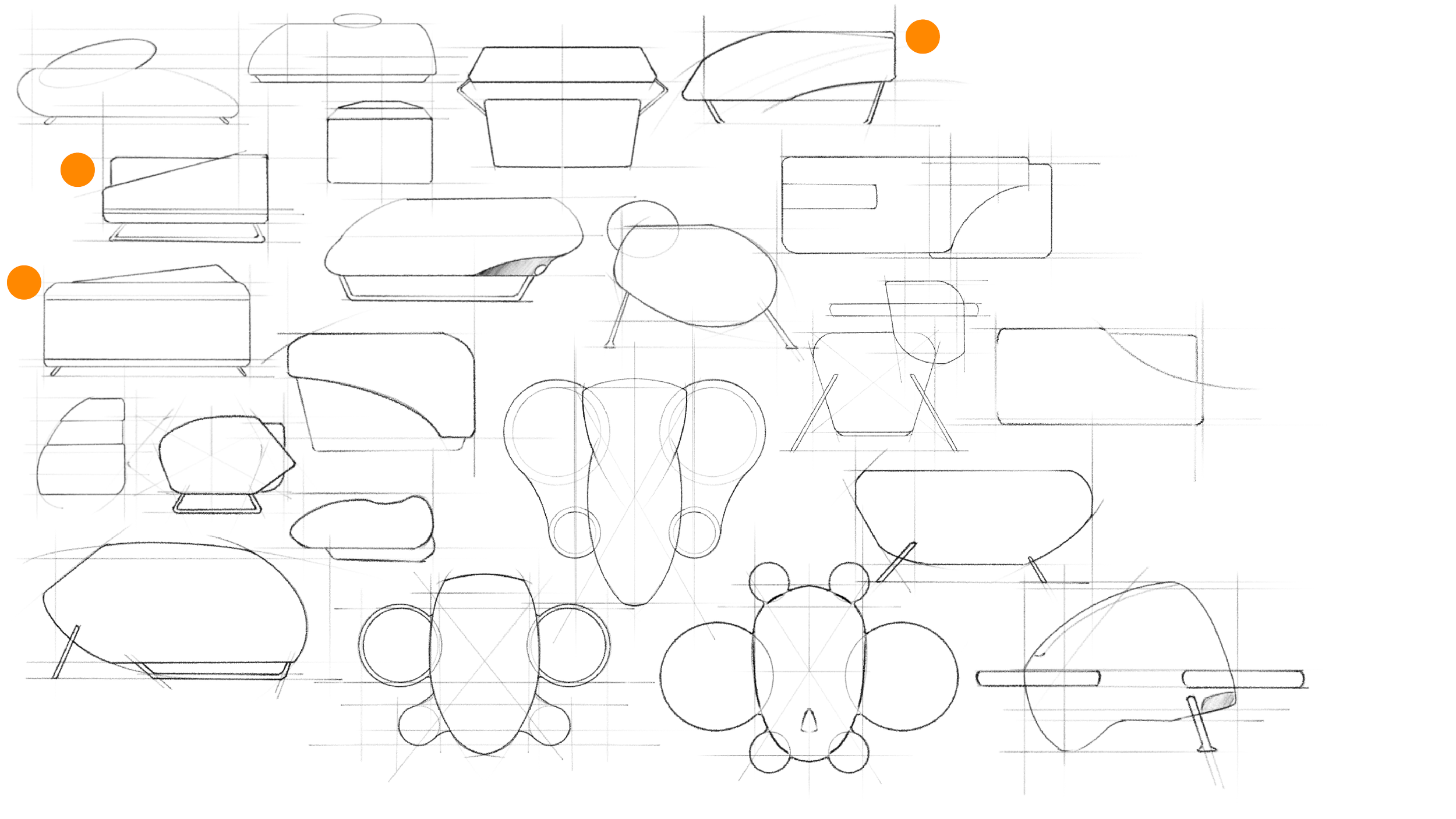

Form Ideation
Inspired by the wing-folding mechanism of beetles, the retractable propellers create a more integrated form
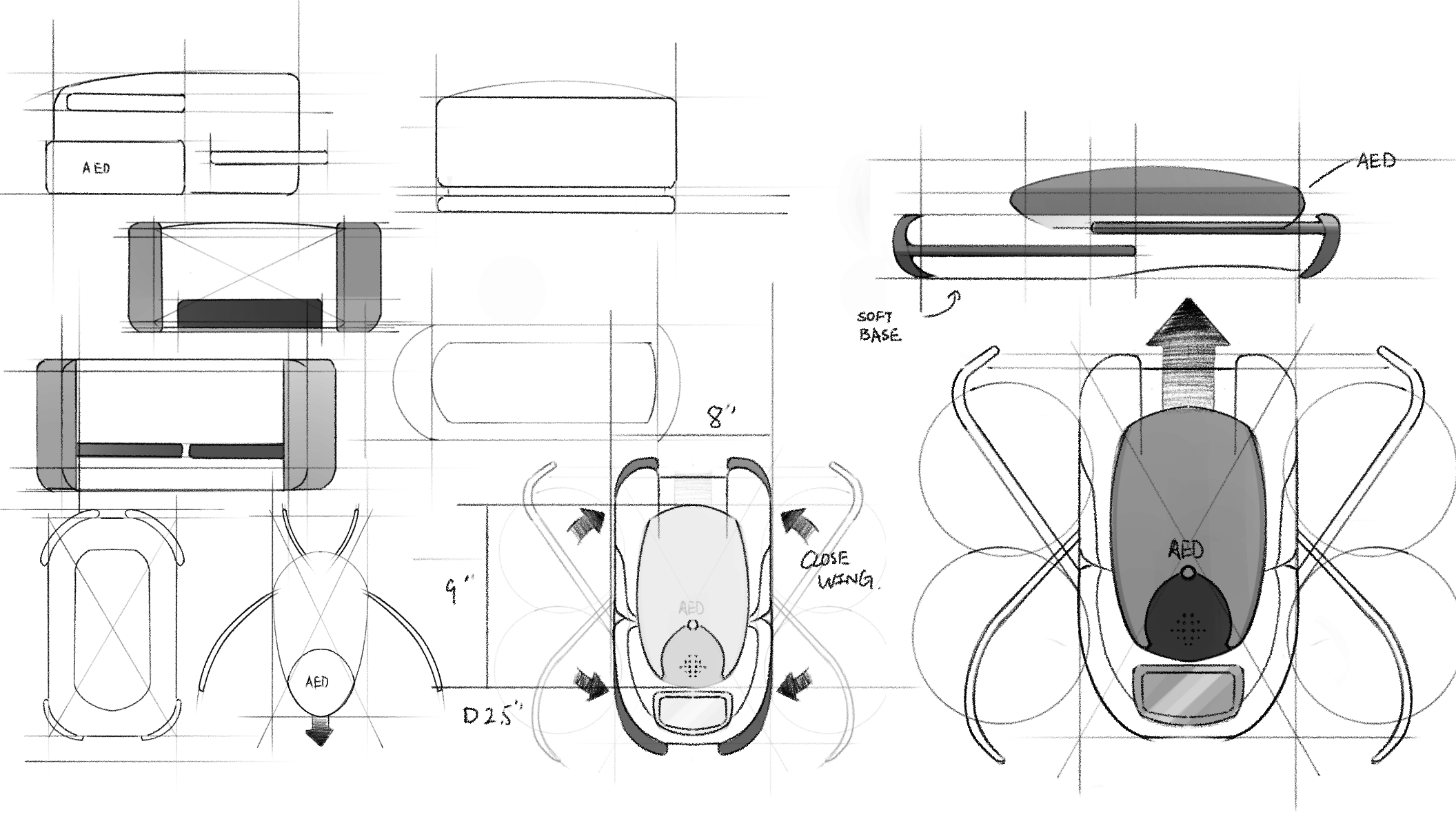


User Scenario
87% of interviewees barely, or even never, saw an AED during their daily
Low public exposure to AEDs results in unfamiliarity with AED locations, and may not know where to retrieve
Detail Iteration
A series of iterations on the retractable propeller, exploring different guard structures and deployment methods
First Integrated Concept
The first concept successfully integrated the features, like the retractable wing, into the overall design
However, the resulting form leaned too heavily toward an insect aesthetic, prompting further refinement toward a cleaner and more approachable appearance.
Concept Direction
By simplifying the form language and reducing the insect-like characteristics, the concept developed into a cleaner and more approachable form.
The smooth surfaces and continuous geometry reinforce the caring nature of a medical product while maintaining the biomimetic principles behind the design.
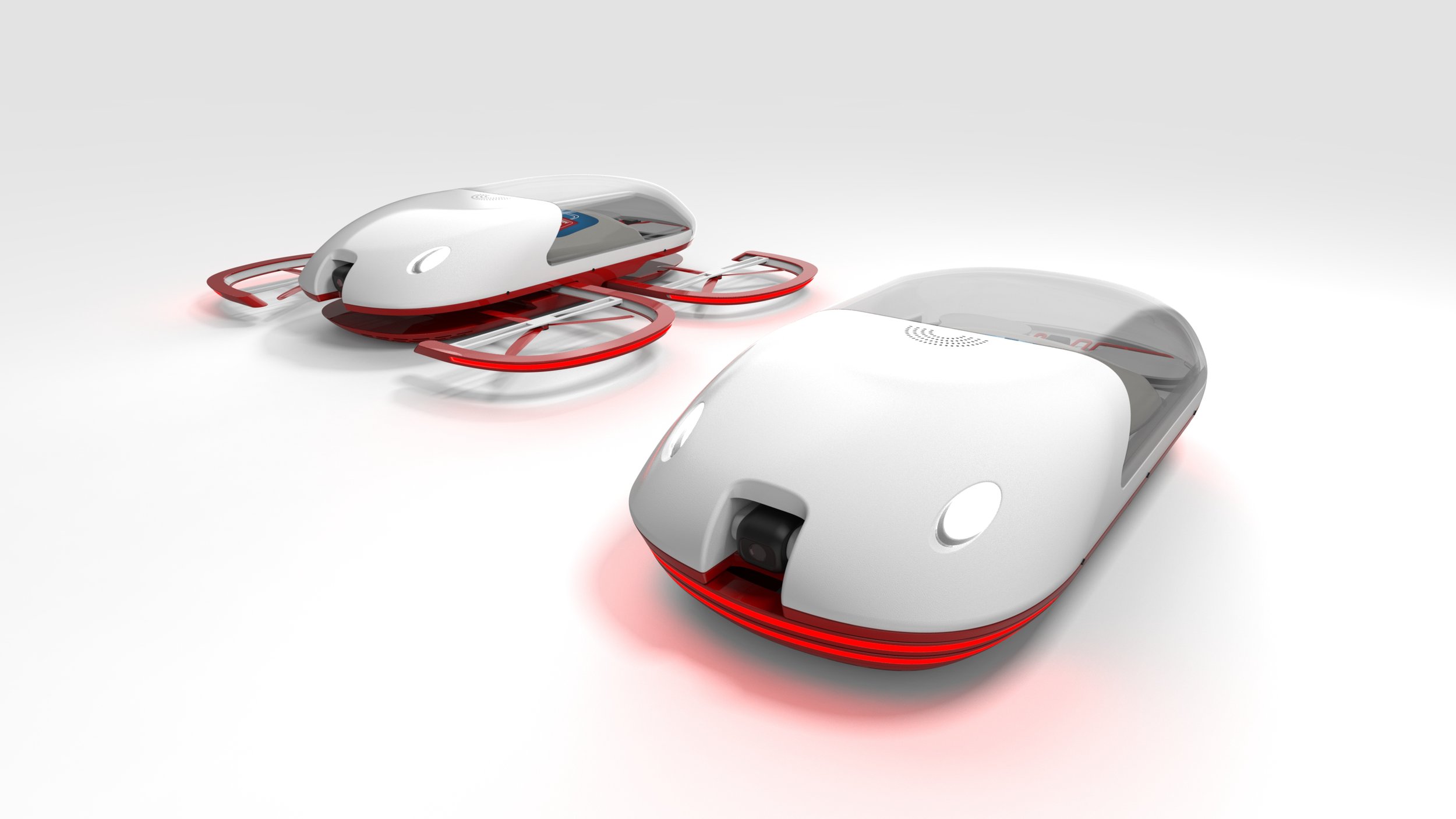
MediWing
After multiple rounds of sketching, iteration, and refinement, the final concept was defined.
The resulting form balances medical approachability, aerodynamic performance, and bionics aesthetic within a cohesive product language.
Features
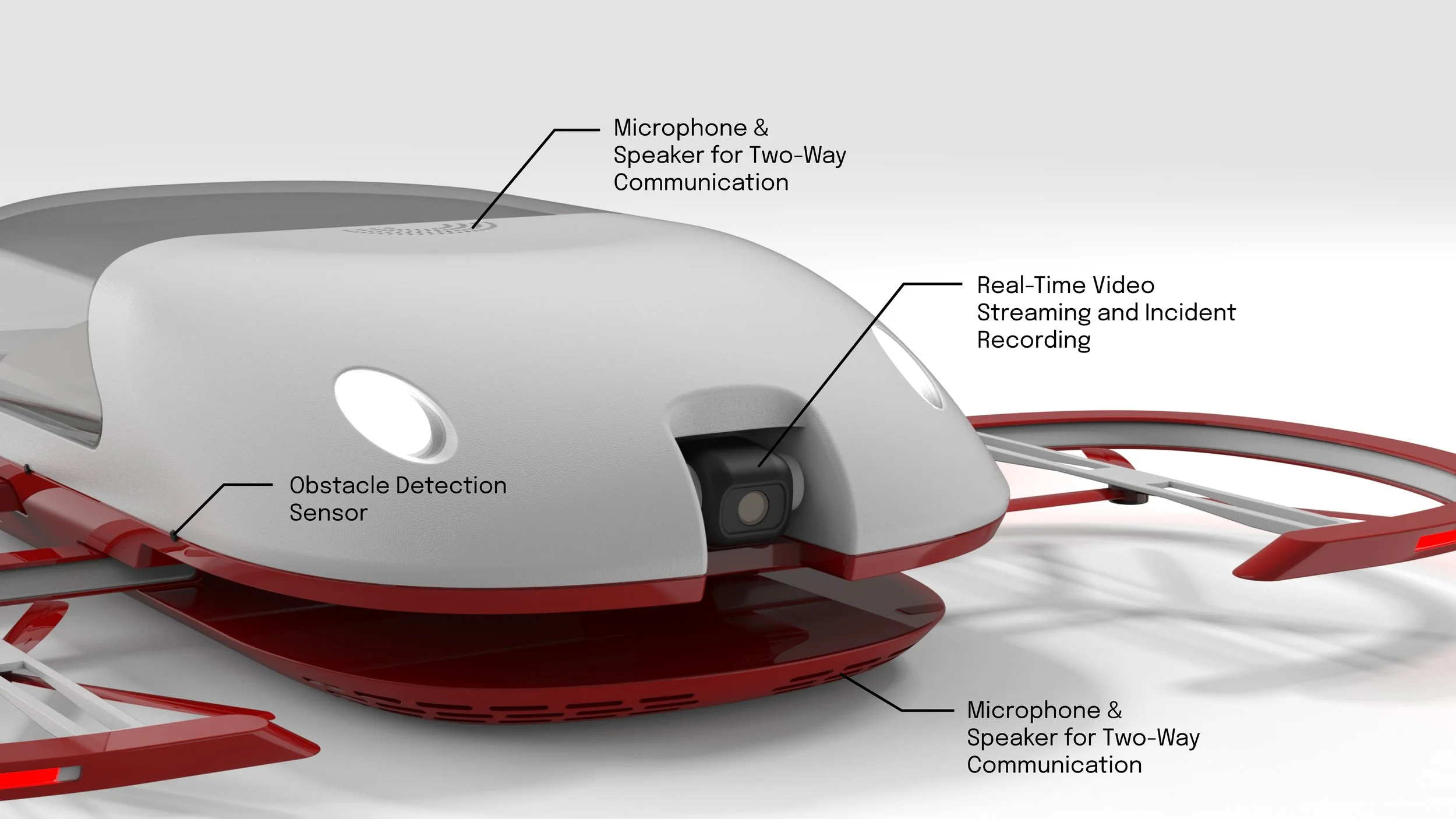
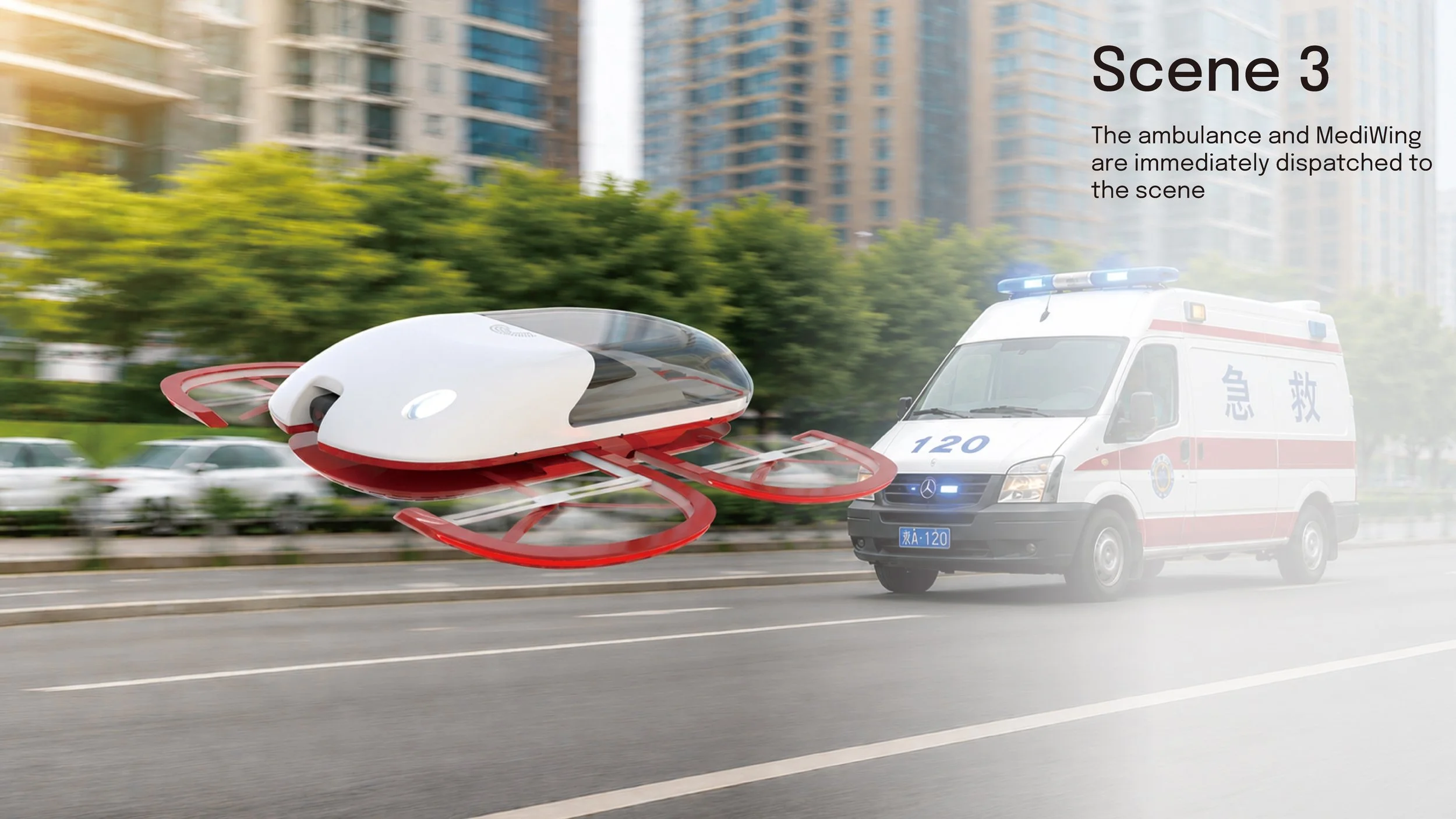
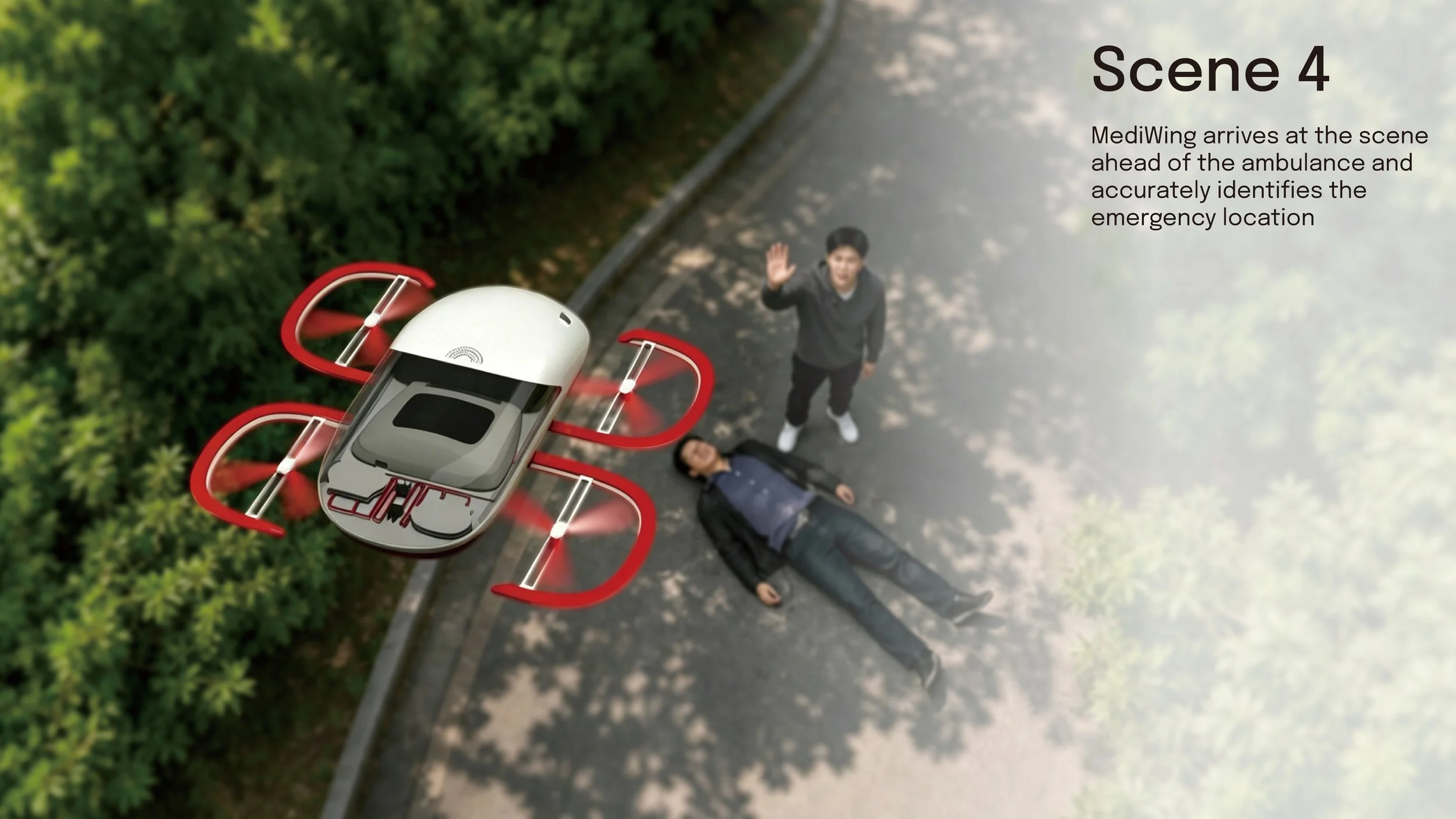
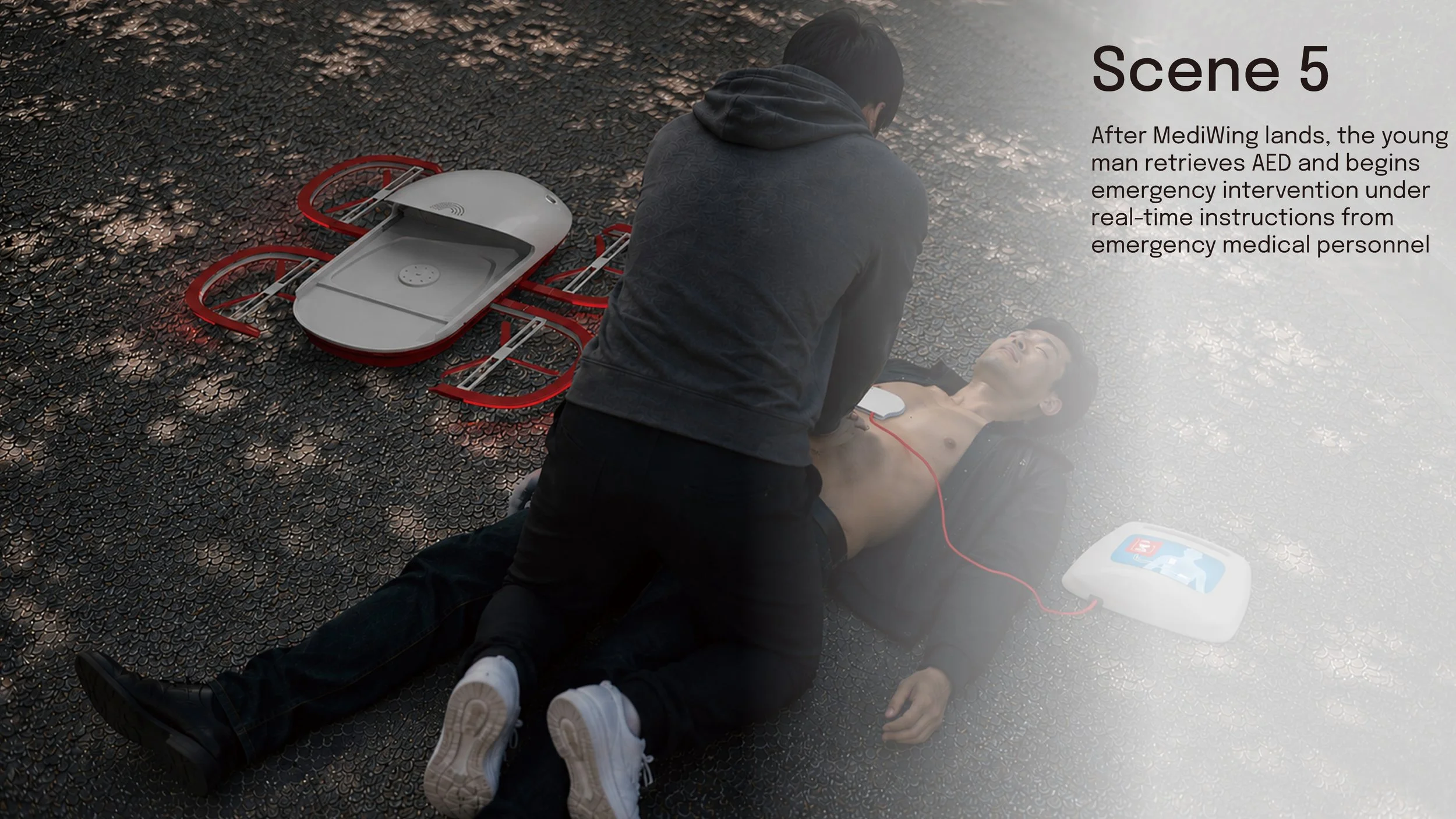
MediWing is designed to deliver more than an AED.
Through real-time video, two-way communication, incident recording, and autonomous navigation, Mediwing connects bystanders with emergency responders and supports early intervention before professional medical assistance arrives.
AED Integration
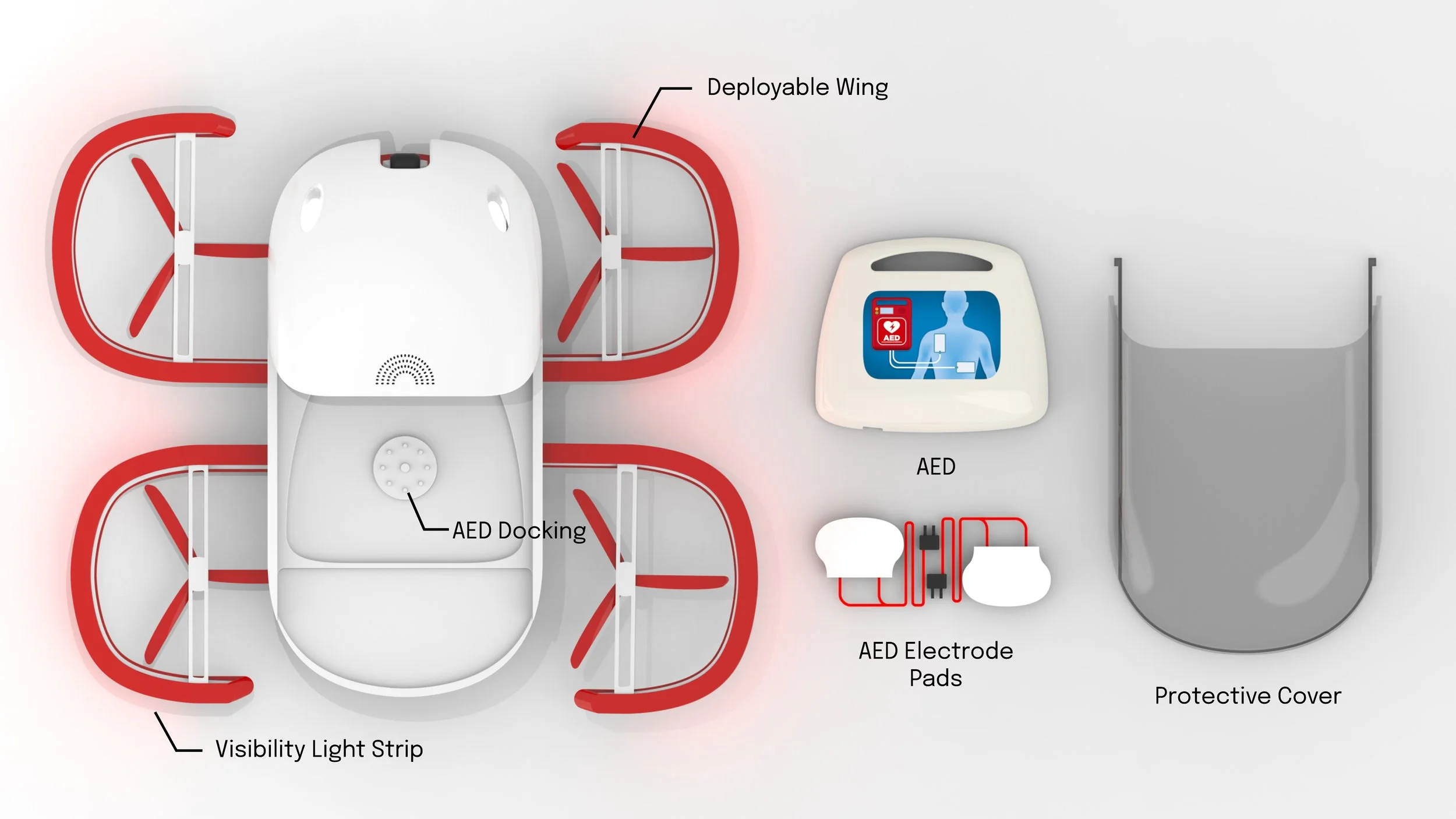
The AED module is stored within a protective cover during standby. Through the docking interface, MediWing continuously monitors AED‘s battery health and connection status, ensuring the AED is ready when needed.
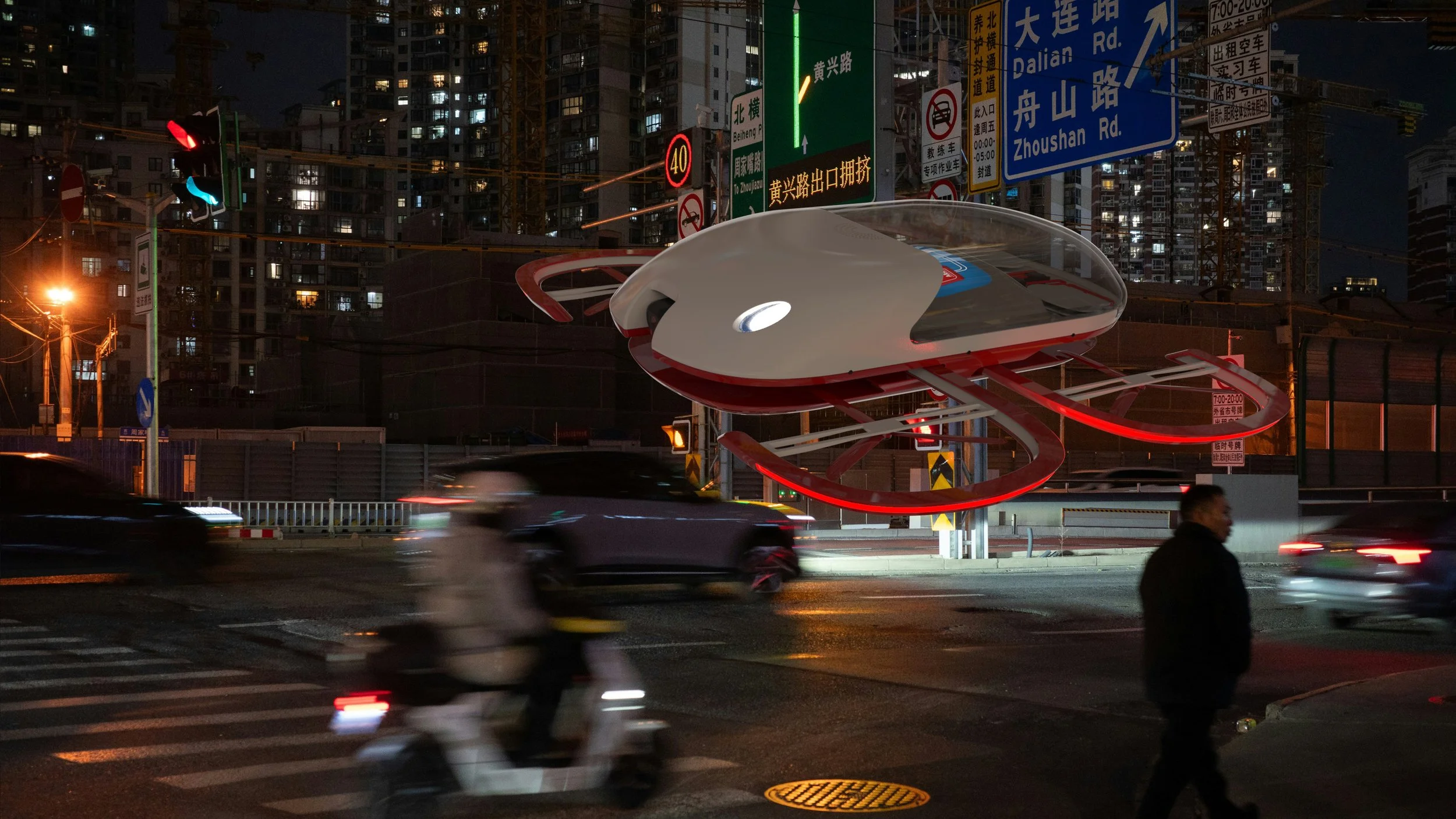
Night Operations
Nighttime emergencies make rescue equipment difficult to locate. The integrated search light and illuminated wing strips enhance visibility during nighttime operations, allowing bystanders to quickly identify the drone and retrieve the AED.
Future Version
A vision of what this system could become over the next decade.
MediWing represents an early step toward autonomous emergency response. As AI and medical technologies continue to advance, future generations of MediWing could provide increasingly active assistance on site.
The Future versions of MediWing could assist with emergency procedures such as AED auto-placement, CPR support, patient monitoring, and other life-saving interventions, helping bridge the gap before professional medical assistance arrives.